Mobile apps are now essential for e-commerce success. Why? They outperform mobile websites in revenue, conversion rates, and user retention. By 2026, mobile sales will account for 60% of all e-commerce transactions globally, and apps are key to capturing this growth. The good news? Building an app is no longer expensive or time-consuming, with platforms offering solutions starting at just $49/month.
Here’s a quick rundown of the top platforms:
- MobiLoud: Converts your website into native apps. Works with Shopify, WooCommerce, and more. Pricing starts at $399/month.
- Tapcart: Shopify-focused, starting at $250/month. Ideal for push notifications and seamless Shopify syncing.
- Vajro (Superfans.io): Shopify-exclusive, starting at $150/month. Great for live video selling and push automation.
- GoodBarber: Platform-agnostic, starting at $50/month. Offers PWAs and a built-in CMS.
- Plobal Apps: Shopify-specific with retention-focused features. Free plan available, but higher tiers start at $199/month.
- Appbrew: Premium Shopify solution at $499/month. Customizable with advanced AI tools.
- Shopney: Shopify-only, starting at $149/month. Known for sleek designs and live chat.
- Buildfire: Beginner-friendly, starting at $165/month. Includes plugins for loyalty programs and geofencing.
- Adalo: No-code builder starting at $36/month. Perfect for small businesses with unique needs.
- Top Website Builders: A directory that helps you find the right app builder for your platform.
Quick Tip: Choose a platform based on your e-commerce system, budget, and feature requirements. Apps can improve customer retention, boost average order value, and drive higher conversions.
The Best Mobile App Builders for BigCommerce in 2026
sbb-itb-94eacf4
1. MobiLoud
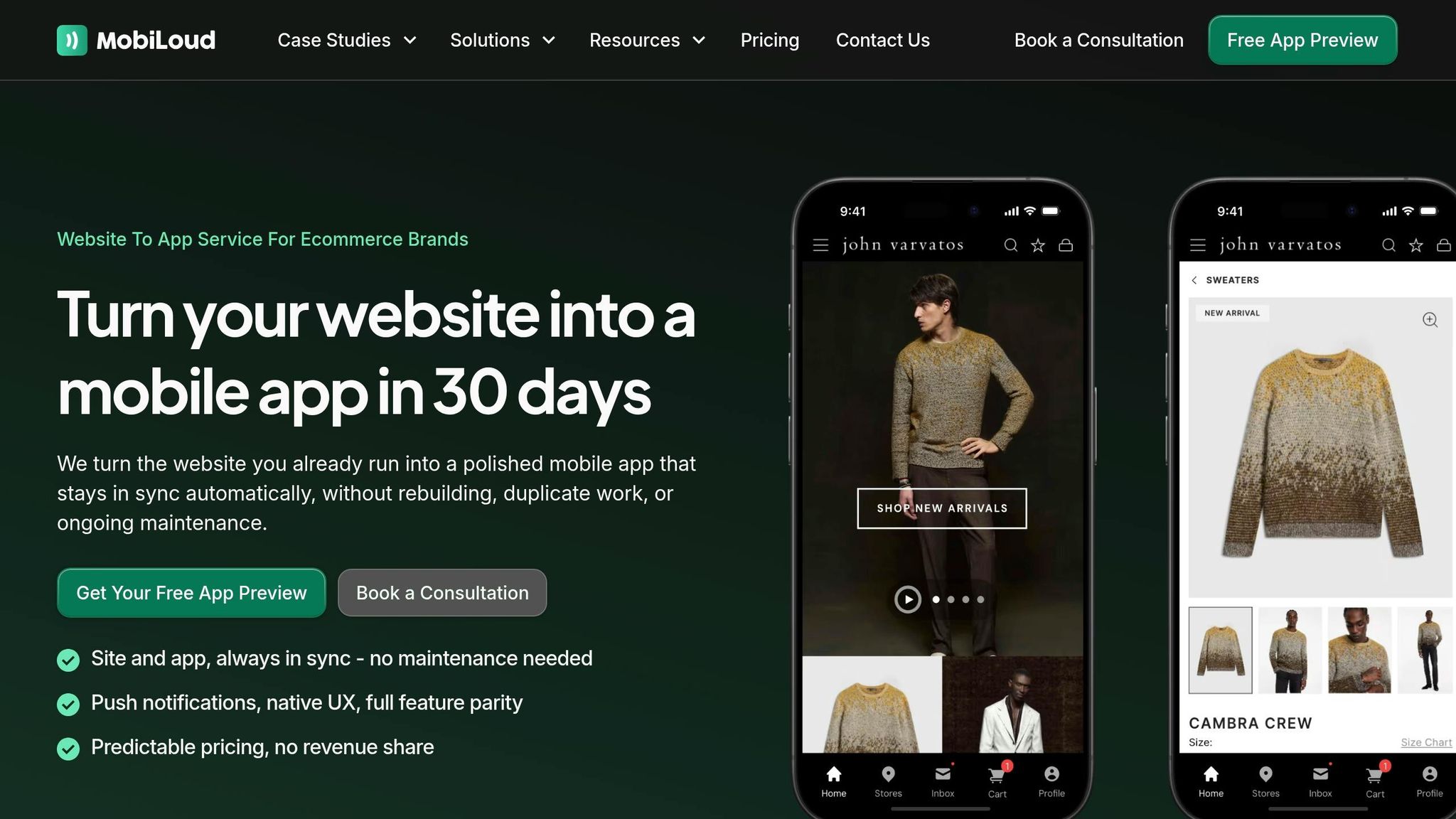
MobiLoud stands out from most app builders by transforming your existing e-commerce website into fully native iOS and Android apps. This means that all your site’s features - like custom checkout processes, third-party plugins, loyalty programs, and review systems - are seamlessly integrated into the app without requiring additional setup.
Starting Price (in USD)
MobiLoud’s pricing begins at $399 per month for the Startup plan, which supports up to 1,000 active users. For larger needs, the Growth plan costs $799 per month and includes support for 5,000 active users, plus features like abandoned cart push notifications. Additionally, there’s a one-time setup fee ranging from $850 to $1,500. WooCommerce users can take advantage of pricing starting at $299 per month[3,10].
Platform Compatibility
This platform works across various e-commerce systems, including Shopify, WooCommerce, BigCommerce, Magento, and even custom-built websites.
Key Mobile Features
MobiLoud offers unlimited push notifications through OneSignal or Klaviyo, biometric login options like FaceID and TouchID, and native tab menus for easy navigation. Since the app directly reflects your website, any updates to products, prices, or content are instantly reflected in the app without requiring manual updates or resubmissions to app stores. As Svend Hansen, Product Owner at Bestseller, shared, "We couldn't find another company that could offer the same features at the same price point, same time to market, and make it as easy as MobiLoud could."
Best For
MobiLoud is a great option for established e-commerce brands with well-optimized mobile websites that want to expand their presence to app stores without the hassle of managing separate codebases. With a 4.8/5 rating from over 200 reviews and a track record of supporting more than 2,000 customers since 2013, it’s a trusted choice for scaling businesses[7,10].
2. Tapcart
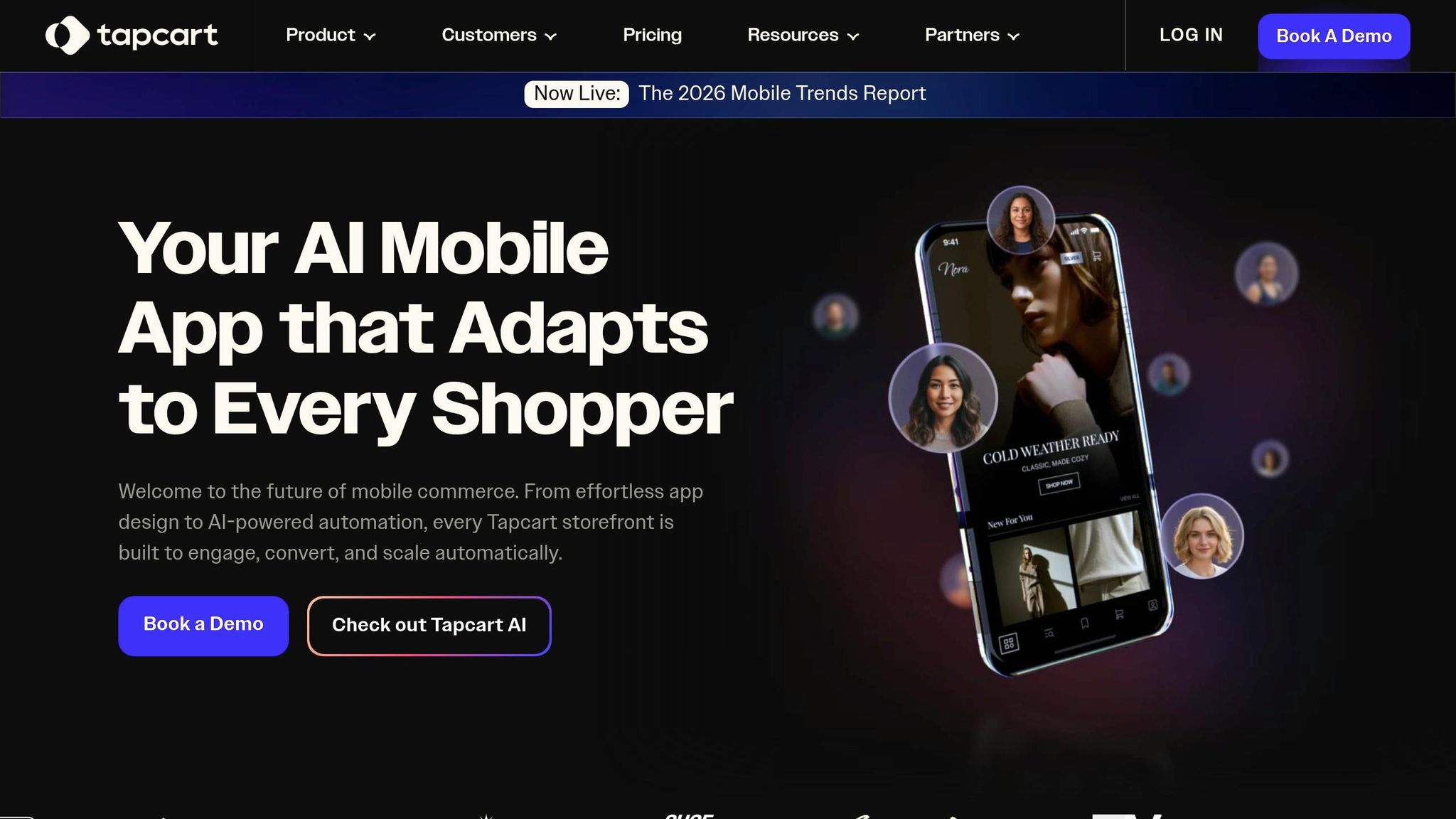
Tapcart is a tool built exclusively for Shopify users, designed to turn your online store into fully functional native apps for iOS and Android. As a Shopify Plus Certified partner, Tapcart ensures seamless performance and security by syncing directly with your Shopify store. This means your app automatically updates with changes to products, inventory, and collections - no extra work required. Everything you adjust on your Shopify dashboard is reflected in real time in your mobile app.
Starting Price (in USD)
Tapcart’s pricing starts at $250 per month for the Core plan, or $200 per month if billed annually. This includes native apps for iOS and Android, unlimited design blocks, standard integrations, and scheduled push notifications. The Ultimate plan is priced at $500 per month (or $400 per month annually), while custom pricing is available for Enterprise-level Shopify Plus stores. Keep in mind, you’ll also need an Apple Developer account ($99/year) and a Google Play account (a one-time $25 fee). This pricing structure is tailored to Shopify’s ecosystem, emphasizing Tapcart’s e-commerce focus.
Platform Compatibility
Tapcart is specifically built for Shopify and integrates directly using Shopify's Storefront API. All backend management, including orders, inventory, and pricing, stays within your Shopify dashboard.
Key Mobile Features
Tapcart offers a range of mobile-focused tools to enhance the shopping experience:
- Push Notifications: Send unlimited branded notifications, complete with GIFs, custom images, and deep links.
- AI Tools: Features like AI Autopilot automatically sync web content, while AI Push Copilot helps craft notification copy based on successful campaigns.
- For You Feed: Leverages real-time shopper behavior to recommend products.
- Native Checkout: Supports popular payment methods like Apple Pay, PayPal, Google Pay, and Amazon Pay.
A great example of Tapcart’s capabilities comes from Credo Beauty. In 2024, they launched their mobile app using Tapcart and hit their six-month revenue target in just two months. The app led to a 23% increase in Average Order Value, a 30% rise in Units Per Transaction, and helped attract new customers, with 15% of initial orders coming from first-time buyers.
Best For
Tapcart is perfect for established Shopify brands and direct-to-consumer stores looking to elevate their mobile experience. Its seamless integration and powerful push notification tools make it an excellent choice for businesses aiming to boost customer engagement and retention.
3. Vajro
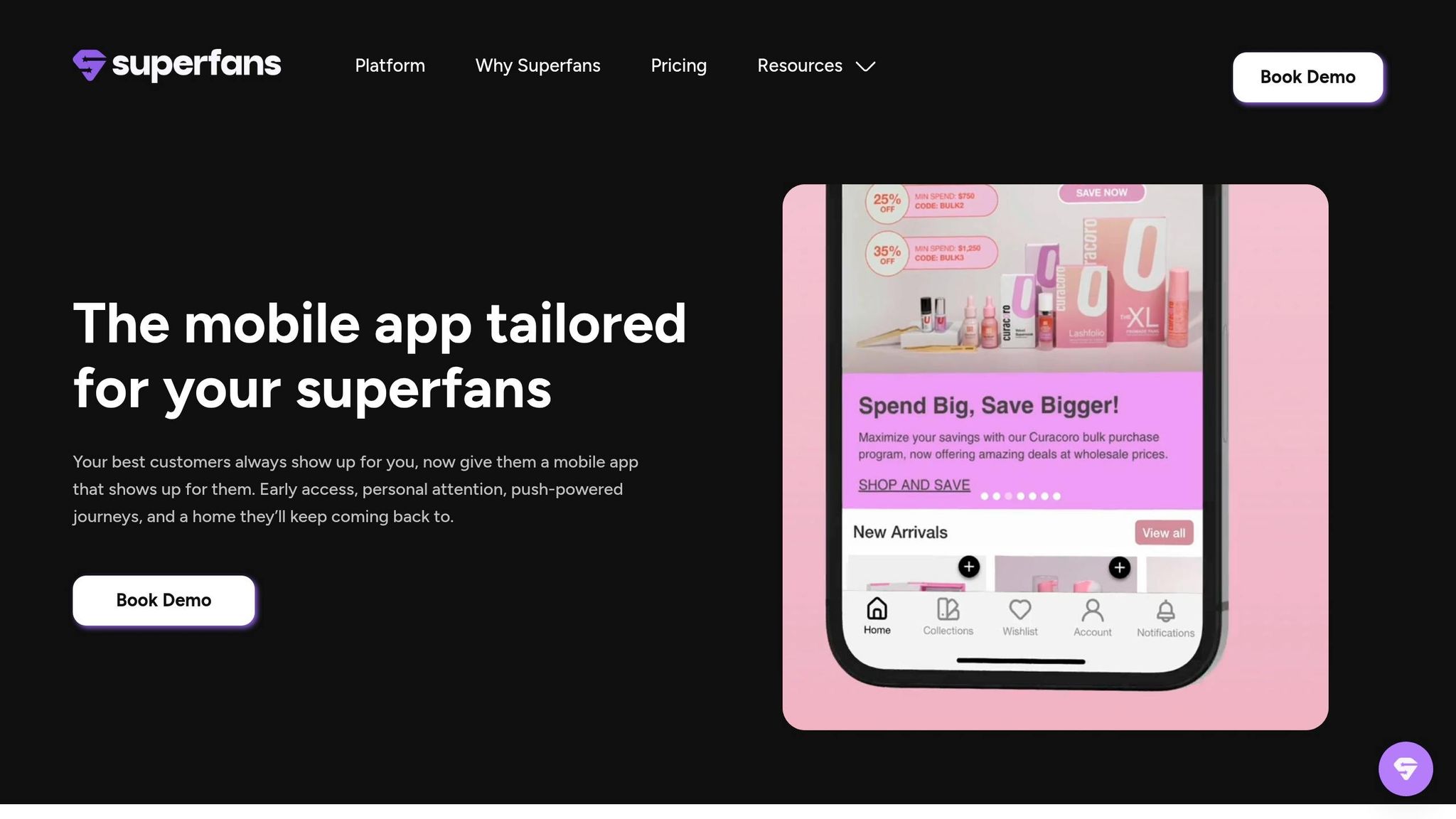
Vajro, now operating under the name Superfans.io, remains a trusted name for Shopify merchants. Designed exclusively for Shopify and Shopify Plus stores, this platform provides a no-code solution to turn your online store into native iOS and Android apps. Its co-building approach ensures you get hands-on support for both design and strategy.
Starting Price (in USD)
Vajro's Starter Plan begins at $150 per month, offering features like unlimited push notifications, app-only discounts, in-app live chat, and deep linking. There are no onboarding fees or additional charges based on your revenue. For more advanced needs, the Unlimited Plan costs $1,000 per month and includes custom app development, unlimited integrations, Klaviyo sync, and a custom product detail page builder. Plus, you can take advantage of a 30-day free trial to explore the platform before committing.
Platform Compatibility
Built exclusively for Shopify and Shopify Plus, Vajro syncs seamlessly with your Shopify backend. This real-time syncing ensures that products, inventory, pricing, and customer data are always up to date. Additionally, Vajro integrates with over 70 Shopify apps, including popular names like Yotpo, Recharge, Judge.me, and Gorgias, allowing you to incorporate your existing tools directly into your mobile app.
Key Mobile Features
One standout feature is Vajro's live selling capability, which uses interactive video sessions synced with Facebook to engage customers. It also offers hyper-personalized push notifications through Klaviyo sync and a drag-and-drop app builder for easy customization. With a 4.9/5 rating from over 870 reviews on the Shopify App Store, users frequently highlight its responsive live chat support and smooth onboarding process.
Best For
Vajro is a great fit for mid-to-large direct-to-consumer brands that prioritize customer retention and loyalty. It’s especially useful for brands planning fast-paced product launches or aiming to create exclusive VIP experiences with gated access, thanks to its strong retention-focused features.
4. GoodBarber
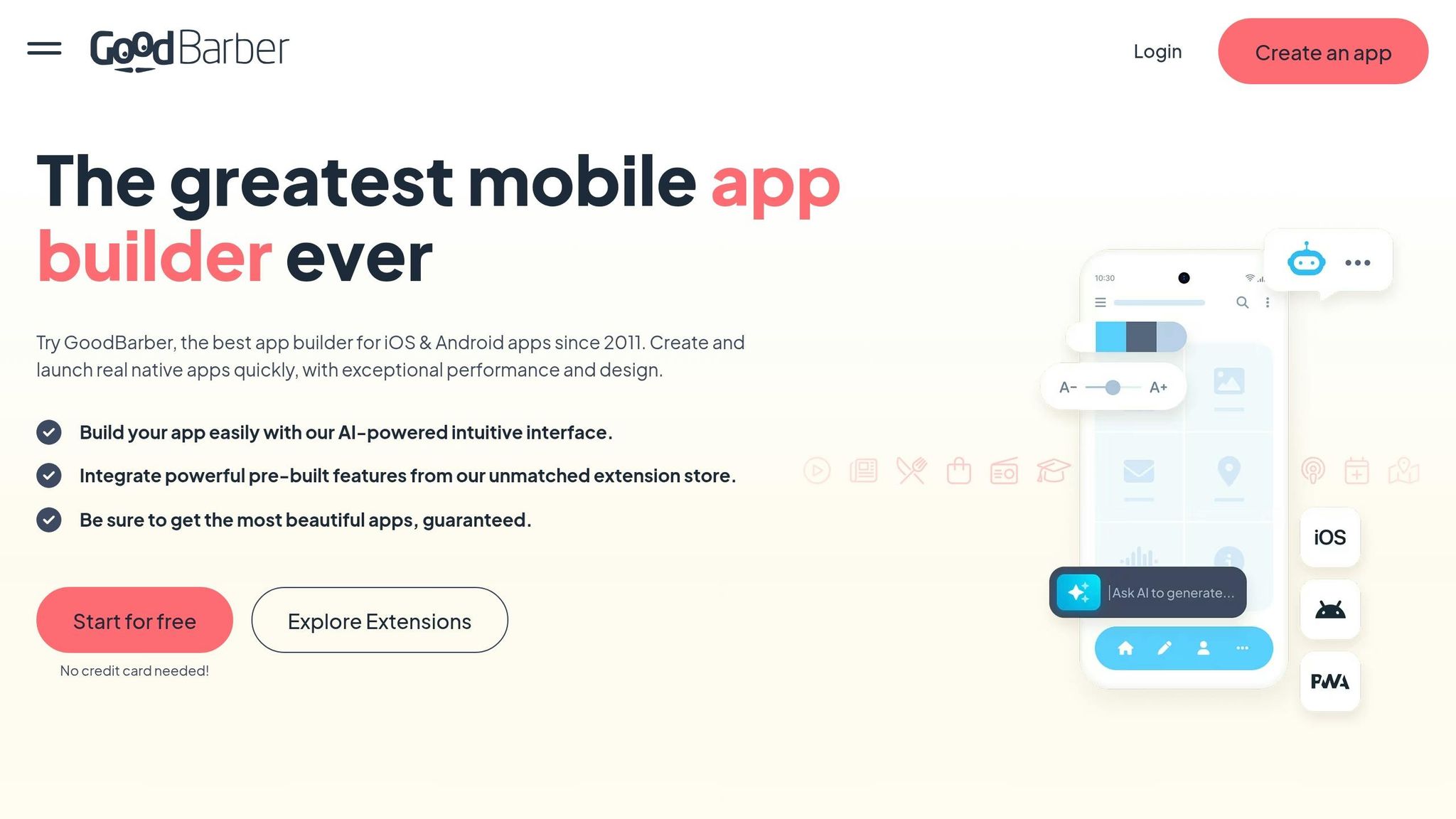
GoodBarber takes a different route compared to Shopify-specific solutions, offering a more independent approach. It’s a platform-agnostic app builder that uses its own CMS to handle products, inventory, and orders. This makes it a great choice for creating hybrid apps that combine shopping features with content like blogs and videos.
Starting Price (in USD)
GoodBarber’s pricing begins at $36/month for basic features. For e-commerce apps, plans range between $50 and $150/month, making it a budget-friendly option for small to medium-sized businesses looking to prioritize an app-first strategy.
Platform Compatibility
Unlike app builders tied to platforms like Shopify, GoodBarber doesn’t offer direct, real-time syncing with Shopify or WooCommerce. If you need integration with WooCommerce, you’ll likely need a tool like Zapier to sync inventory and orders. Instead, most product data is managed through GoodBarber’s built-in CMS. While this gives you full control, it requires hands-on management.
Key Mobile Features
GoodBarber offers unlimited push notifications, allowing you to segment users based on their interests or location. It supports Progressive Web Apps (PWAs) in addition to native iOS and Android apps, providing multiple ways to connect with your audience. The visual drag-and-drop builder includes over 350 customizable design options, and you can enhance functionality with AI-powered product recommendations and chatbots for 24/7 support. The built-in CMS handles your product catalog, inventory, and orders, while payment processing is streamlined through Stripe and PayPal.
This combination of flexibility and control makes GoodBarber stand out in the e-commerce mobile app space.
Best For
GoodBarber is a great fit for small to medium-sized businesses that value creative freedom and unique app designs over complex backend integrations. It’s particularly useful for brands looking to create hybrid content-commerce apps - like a fashion brand combining a blog with a storefront or a local business aiming for an app-first presence without an established online store.
5. Plobal Apps
Plobal Apps, launched on February 26, 2016, is a mobile app builder designed specifically for Shopify stores. It uses Shopify's Storefront API to sync products, orders, and customer data in real-time, creating a strong foundation for its retention-focused features.
Starting Price (in USD)
Plobal Apps provides a free Starter plan, which includes 2 integrations, native iOS and Android apps, a drag-and-drop builder, unlimited push notifications, and real-time analytics. However, a 3% success fee applies to in-app sales once your app goes live. Paid plans start at $199/month for the Growth plan (or $1,990/year with a 17% discount), offering 4 standard integrations. The Essential plan costs $499/month, while the Enterprise plan is priced at $1,199/month with an additional 1% success fee. Advanced features may require detailed setup during onboarding.
Platform Compatibility
This platform is exclusively for Shopify and integrates with popular tools like Klaviyo, Gorgias, Recharge, Yotpo, Nosto, and Searchspring. It also supports multi-currency and multi-language capabilities, making it suitable for international customers.
Key Mobile Features
Plobal Apps stands out for its retention-first strategy and seamless Shopify integration. It offers unlimited push notifications, automated campaigns for abandoned carts and browsing, and user segmentation based on over 60 in-app actions. Additional features include one-click Apple Pay checkout, barcode scanning for retail stores, and advanced product filters. The drag-and-drop interface allows marketing teams to update content and layouts without relying on developers.
Best For
Plobal Apps is tailored for mid-market to enterprise Shopify brands that focus on retention campaigns and personalized mobile experiences. With a 4.8/5 rating on the Shopify App Store from 150 reviews (93% of which are 5-star ratings), it offers robust analytics, multi-store management, and scalability for high-volume operations. However, the subscription costs may be a hurdle for smaller businesses.
6. Appbrew
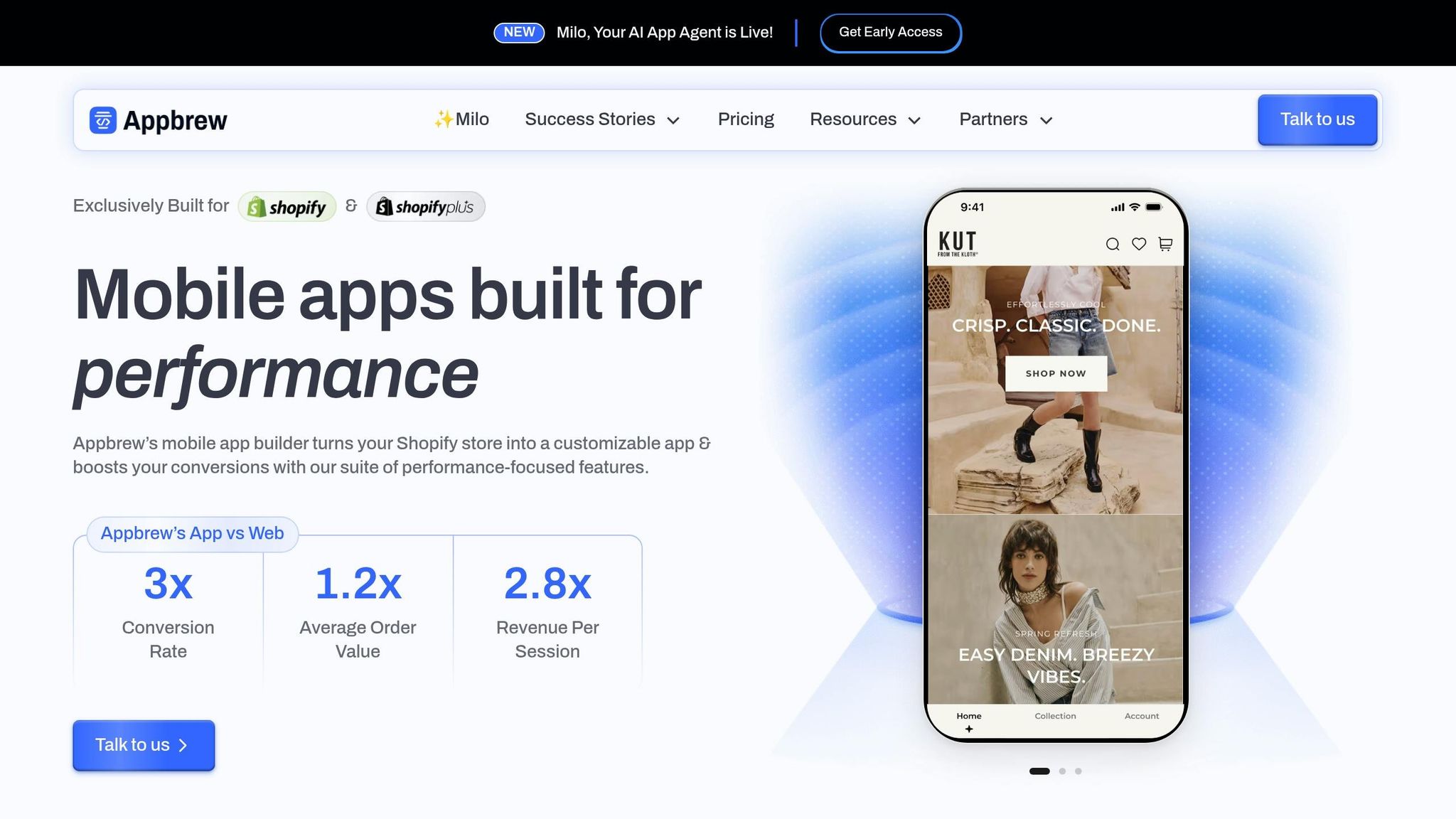
Appbrew is a high-end mobile app builder designed specifically for Shopify merchants. It uses a hands-on approach where the Appbrew team works closely with you to develop a true native app built on React Native. This ensures authentic iOS and Android experiences, steering clear of web-wrapped alternatives. Its premium, tailored service is reflected in its pricing, which caters to enterprise-level customization.
Starting Price (in USD)
Pro plans begin at $499/month, with some enterprise-level setups starting at $999/month, depending on the level of customization required. The platform is free to install, allowing you to build and preview your app before making any payments. Charges only apply once your app goes live. A free trial is also available via the Shopify App Store.
Platform Compatibility
Appbrew integrates seamlessly with Shopify, syncing in real-time with your store's data. This includes products, pricing, inventory, and metafields, enabling the creation of a branded app that updates automatically.
Key Mobile Features
Appbrew's collaborative approach unlocks a range of advanced features. Highlights include:
- Milo, an AI concierge: Helps customers find products using natural language and automates processes to enhance the shopping experience.
- AI Skin Analyzer: Designed for beauty brands, this tool provides personalized product recommendations, boosting average order values. This is a prime example of how to enhance your website with AI-powered builders to drive conversions.
- Unlimited push notifications, abandoned cart recovery, Express Checkout, and app-exclusive offers are also part of the package. These features ensure smooth performance across both iOS and Android platforms.
Best For
Appbrew is ideal for high-growth Shopify brands and DTC companies that need a customized app solution. With a perfect 5.0-star rating from 56 reviews on the Shopify App Store, it’s especially suited for beauty and cosmetic brands that benefit from its specialized AI tools. However, its higher pricing and consultative model may not appeal to smaller businesses or those looking for a DIY option.
7. Shopney
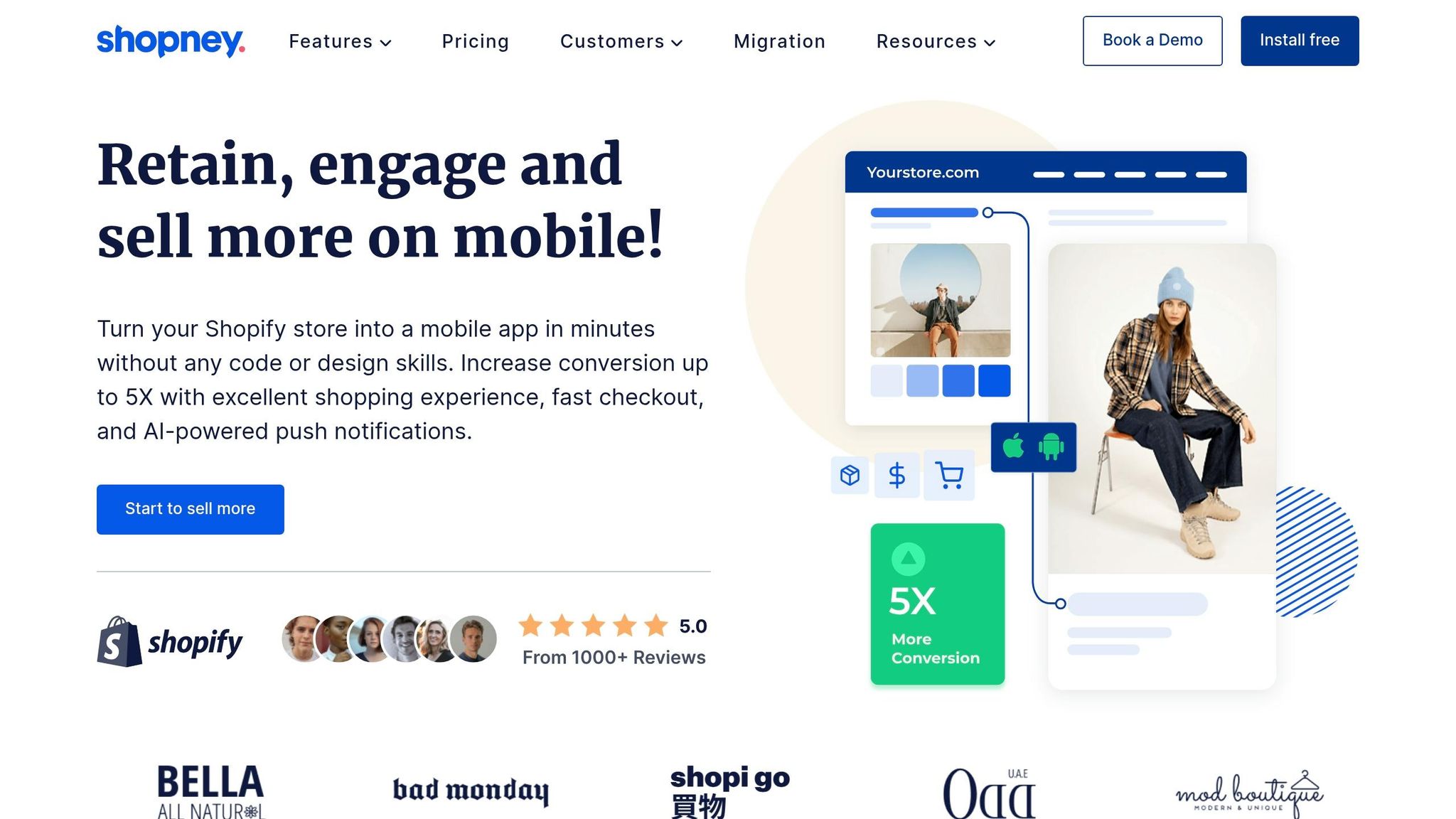
Shopney is a no-code mobile app builder tailored specifically for Shopify and Shopify Plus stores. Known for its sleek design capabilities and real-time customer interaction tools, Shopney enables brands to launch their apps in as little as five days. With over 3,000 brands using the platform and a 5.0-star rating from 793 reviews on the Shopify App Store, it’s clear that Shopney has made its mark.
Starting Price (in USD)
Shopney's pricing begins with the Silver plan at $149/month (or $119/month if billed annually). This plan includes white-label iOS and Android apps, four customizable themes, in-app chat integrated with Shopify Inbox, Google Analytics, Facebook Ad tools, and back-in-stock notifications. For businesses needing more features, there are higher-tier plans like Gold at $299/month, Platinum at $599/month, and Enterprise starting at $1,299/month. All plans come with a 30-day free trial, but users must also cover Apple's $99/year and Google's $25 one-time developer fees.
Platform Compatibility
Shopney is built exclusively for Shopify and Shopify Plus stores, ensuring seamless integration. Any updates made to products, inventory, or collections in your Shopify backend are automatically synced with your app in real time.
Key Mobile Features
Shopney offers unlimited push notifications on all plans, with advanced options like AI-driven and segmented notifications available in higher tiers. These tools help with abandoned cart recovery and personalized promotions. The platform's in-app live chat integrates with Shopify Inbox, Gorgias, and Zendesk, allowing brands to provide instant customer support. Additional standout features include Augmented Reality for product visualization, barcode scanning, and live shopping functionality. According to Shopney, apps created on their platform see a 22× higher conversion rate compared to mobile websites, with users spending 13.5× more time in the app.
Best For
Shopney is a great choice for mid-sized and established Shopify stores that value strong branding and customer engagement. While many users appreciate its responsive support team and user-friendly drag-and-drop editor, some smaller businesses have mentioned that the pricing can be a bit steep. There have also been occasional reports of issues with discount code synchronization.
8. Buildfire
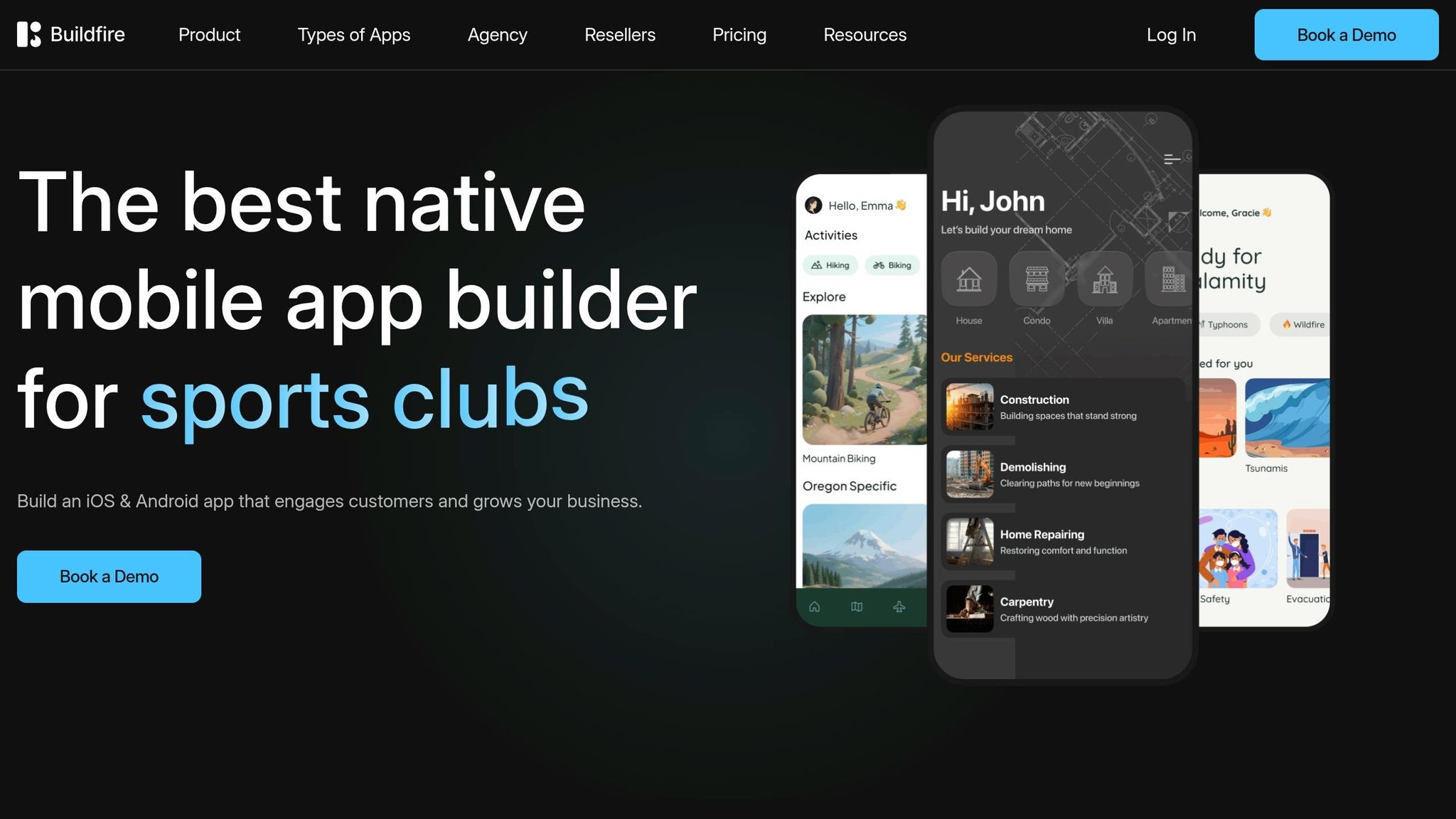
Buildfire is a no-code app builder with drag-and-drop functionality, powering over 5,000 mobile apps and offering more than 150 pre-built plugins - claimed to be the largest selection in the app builder industry. With a 4.8/5 rating on G2 and Clutch, it’s a popular choice for beginners and small businesses. Caroline F., the owner of Olive You Whole, shared her experience:
"I'm not a developer. I'm not someone who knows code fluently. So I needed something that was just user-friendly and that I would be able to manage on my own".
Starting Price (in USD)
The Standard plan is priced at $165/month, offering basic native app features, 100,000 push notifications, and 5GB of storage. For businesses looking to monetize through e-commerce, the Growth plan costs $315/month and allows one in-app purchase. The Scale plan, at $440/month, includes unlimited in-app purchases, 300,000 push notifications, and 50GB of storage. All plans come with publishing support, but users must cover the Apple App Store's $99/year fee and Google Play Store's one-time $25 fee.
Platform Compatibility
Buildfire integrates seamlessly with Shopify, allowing users to import their entire product catalog by connecting their Shopify account. While Shopify is the primary focus for e-commerce, the platform also supports WooCommerce, Magento, and BigCommerce, though these may require more customization. Additionally, Buildfire supports Zapier, enabling connections to thousands of apps and services, expanding its functionality even further.
Key Mobile Features
The platform includes real-time product catalog syncing, targeted push notifications with geo-fencing and deep linking, and checkout options optimized for Apple Pay and Google Pay. Its plugin marketplace offers tools for customer loyalty programs, appointment scheduling, and video streaming. According to Buildfire's research, 70% of users find push notifications valuable, with 40% opening them within an hour. For businesses with physical locations, geofencing and beacon support allow real-time notifications when customers are nearby or inside the store.
Best For
Buildfire is ideal for beginners, small to mid-sized businesses, franchises, and content-focused brands seeking an affordable native app solution. Personal trainer Sandra Dios described her experience:
"My app has been live for about a year, and my clients LOVE IT! I use it to share workouts, videos, meal plans, everything…AND I can schedule appointments and collect deposits straight from the app".
While users appreciate its intuitive interface and responsive customer support, some have mentioned a learning curve and occasional difficulties with content management. Up next, we’ll explore more app-building options.
9. Adalo
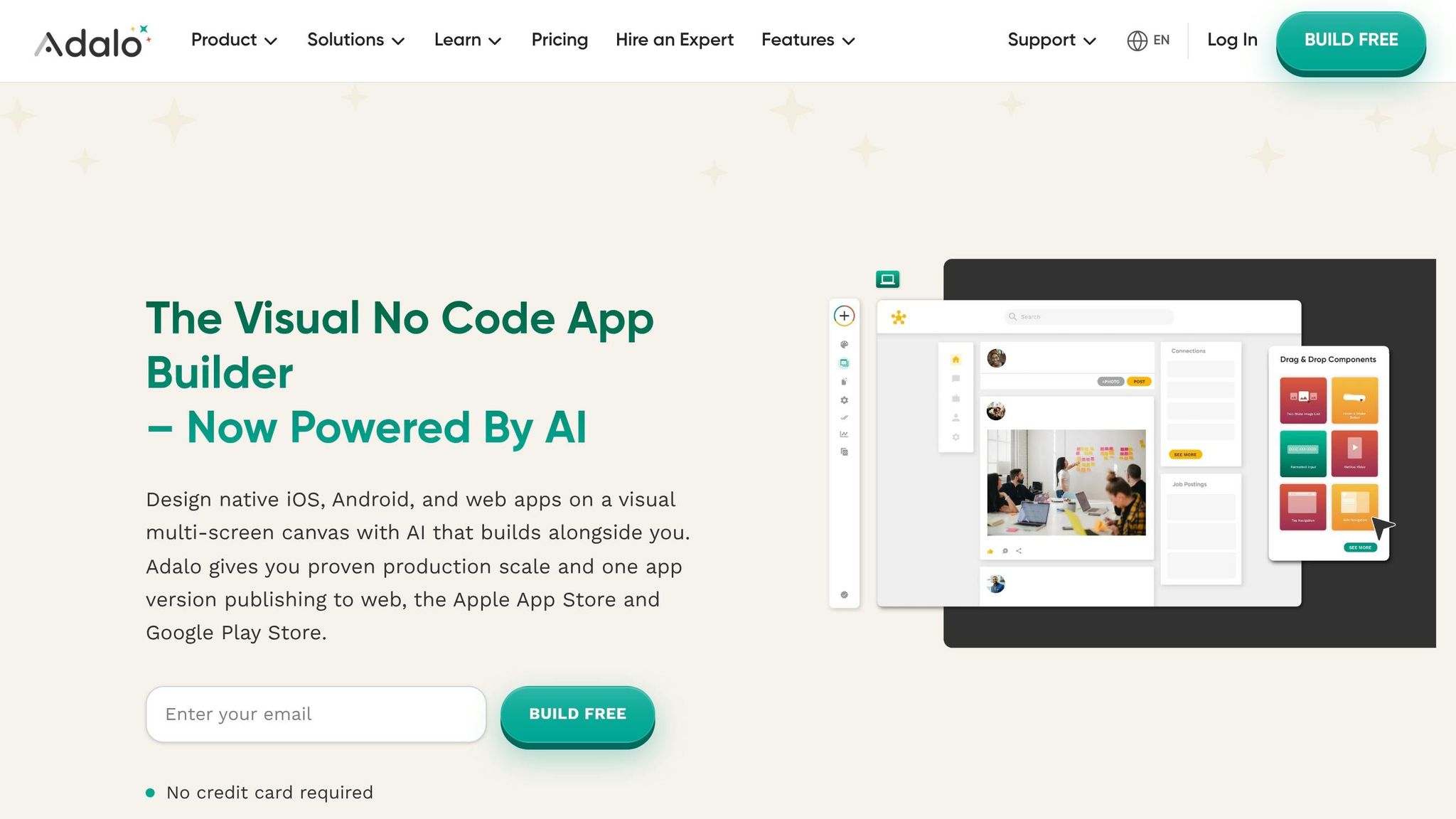
Adalo is a no-code platform designed with a visual canvas and e-commerce essentials and an AI builder called "Ada", which helps create native iOS and Android apps. Released in late 2025, Adalo 3.0 is 3–4 times faster than previous versions and can handle over 1,000,000 monthly active users. It features a built-in Postgres database, eliminating the need for external setups and ensuring businesses have complete control over their customer data.
Starting Price (in USD)
Adalo offers a free plan that allows users to build unlimited apps with access to the AI builder, supporting up to 500 database records for prototyping. Paid plans start at just $36 per month, covering publishing to both the Apple App Store and Google Play Store, along with unlimited users, records, and storage. Adalo doesn’t charge any sales commission, with only standard payment processor fees applying. For comparison, competitor Thunkable charges $189 per month for app store publishing.
Platform Compatibility
Adalo enables publishing across iOS, Android, and the Web from a single build. It integrates with over 6,000 tools via Zapier and Make, supports payment processing through Stripe (including Apple Pay), and features "SheetBridge", which connects Google Sheets as a relational database to sync inventory data seamlessly.
Key Mobile Features
Adalo offers native push notifications to keep customers updated on sales, new arrivals, restocks, and shipping. Its "Magic Start" tool uses AI to create a fully functional e-commerce app - including a catalog, cart, and checkout - in under two minutes based on a brief description. The platform also supports complete shopping functionality, with customizable product catalogs (including variants), secure checkout processes, and order tracking, all managed through an intuitive drag-and-drop interface.
Best For
Adalo is perfect for beginners, non-technical entrepreneurs, and small businesses looking to create a custom-branded native app without the high cost of traditional development, which often exceeds $25,000. According to Adalo, users can bring an idea to life and launch a store in less than a week. In 2026, it was ranked #1 among visual no-code app builders, achieving a composite score of 5.76/10 based on 345 citations. While it’s highly scalable for large user bases, it might not be the best option for established stores needing advanced features like automated tax calculations or complex shipping rules right out of the box. Next, we’ll look at how Top Website Builders fits into the evolving mobile app landscape.
10. Top Website Builders
Top Website Builders serves as a detailed directory of e-commerce builders that support mobile app integration. Instead of creating apps directly, it connects businesses with leading mobile app builders. These include website-to-app converters, platform-specific DIY tools, and versatile no-code builders.
Platform Compatibility
The directory highlights builders that work seamlessly with platforms like Shopify, WooCommerce, Magento, BigCommerce, and even custom-built websites. Many of these tools integrate natively with platforms, ensuring smooth syncing of products, orders, and other essential data. Additionally, website-to-app services offer flexibility by wrapping your website in a native app, making them compatible across various platforms.
Key Mobile Features
Beyond compatibility, the directory focuses on builders that excel in mobile performance and customer retention. These tools deliver native app-like experiences, ensuring quick load times, smooth navigation, and real-time updates for inventory, pricing, and orders. Many also include features designed to boost retention, such as automated push notifications for abandoned carts, loyalty program integrations, and personalized shopping experiences that drive sales.
Best For
This resource is perfect for both established businesses and startups exploring mobile strategies. It helps businesses make informed choices, whether they need to maintain complex integrations or determine if a DIY solution fits their team’s capabilities. With mobile commerce expected to make up 75% of all e-commerce sales by 2025 - projected to hit $6.5 trillion globally - finding the right mobile app builder is becoming an essential step for staying competitive.
Comparison Table
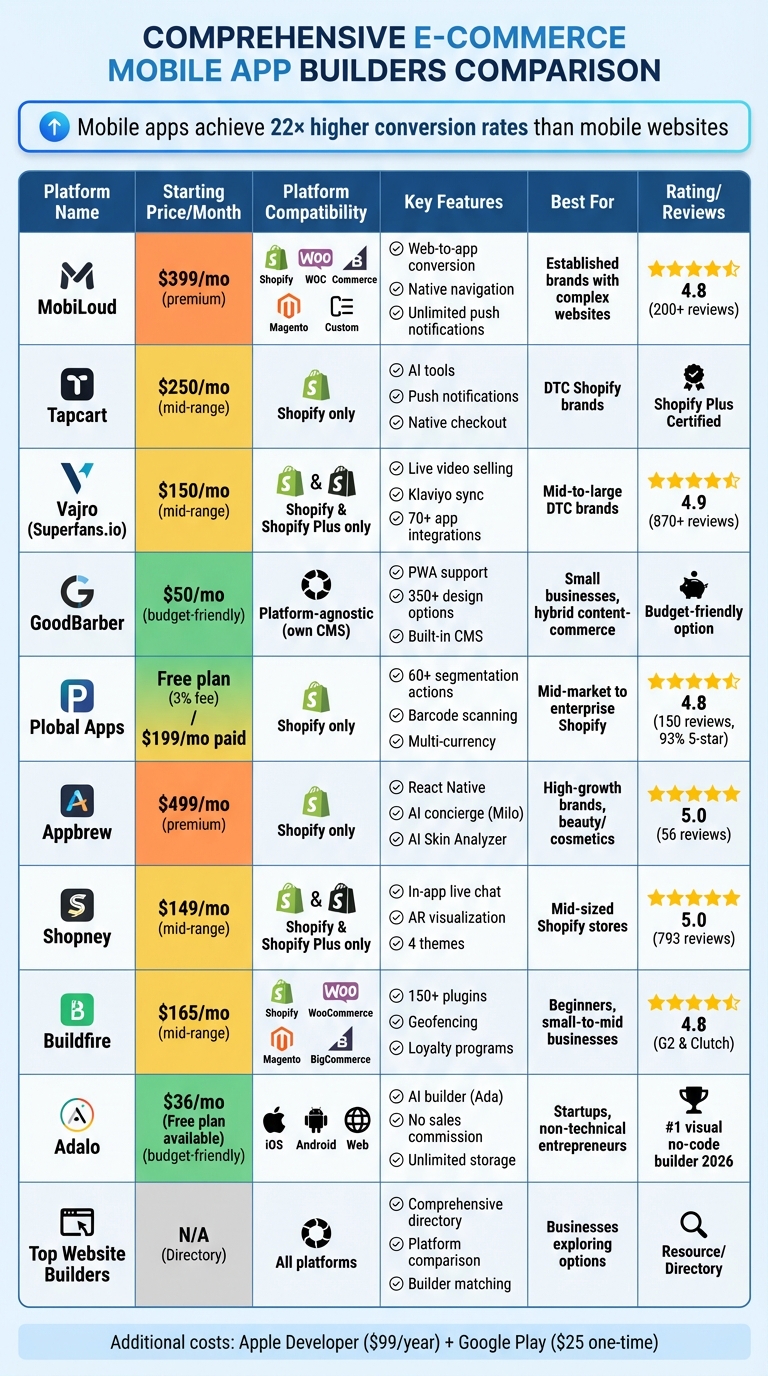
E-commerce Mobile App Builders Comparison: Pricing, Features & Platform Compatibility
Here's a handy table to quickly compare the key features, pricing, and ideal use cases of popular e-commerce mobile app builders. It’s designed to help you identify which option aligns best with your budget, platform, and business goals.
| Builder | Starting Price | Compatibility | Key Mobile Features | Best For | Main Pros | Main Cons |
|---|---|---|---|---|---|---|
| MobiLoud | $799/mo | Any (Shopify, WooCommerce, Magento, Custom-built sites) | Full web-to-app parity, native navigation, push notifications | Established brands with complex custom websites | No rebuild needed; managed service; preserves all site logic | Limited deep UI redesign freedom |
| Tapcart | $250/mo | Shopify | Block-based editor, deep linking, push marketing suite | DTC brands prioritizing fast time-to-market | Fast launch; Shopify-native; easy for marketers | Must maintain a second storefront; Shopify only |
| Vajro (Superfans) | $150/mo | Shopify | Live video selling, smart push automation, AR support | Brands focused on live shopping and engagement | Strong live selling features; quick deployment | Limited to Shopify ecosystem |
| GoodBarber | ~$50/mo | Agnostic | PWA option, advanced design tools, offline mode | Content-heavy stores or small businesses | High design flexibility; affordable entry | Weak backend sync; manual data management |
| Plobal Apps | Custom | Shopify | Segmented push, loyalty triggers, advanced analytics | Mid-market brands focused on retention | Powerful retention workflows; data-driven | Longer onboarding process |
| Appbrew | $999/mo | Shopify | React Native performance, A/B testing, custom design | High-growth brands needing top performance | High-touch implementation; superior speed | Expensive; requires higher investment |
| Shopney | $149/mo | Shopify | In-app live chat, theme-based design, automated push | Mid-sized brands wanting easy engagement | Built-in chat; easy drag-and-drop design | Shopify only; limited custom logic |
| Buildfire | $159/mo | Agnostic | Plugin marketplace, content + commerce mix | Beginners or content-led selling strategies | Fast assembly; modular functionality | Customization ceiling; fragmented logic |
| Adalo | $29/mo | Agnostic | Custom data models, visual action workflows | Startups needing unique, custom UI | High UI customization without code | Manual commerce logic; scalability risks |
| Top Website Builders | N/A | Directory of all platforms | Comprehensive directory of builders | Businesses exploring mobile strategies | Comprehensive directory; platform comparison | Acts as a directory |
This table highlights the strengths and trade-offs of each option, from the entry-level $29/month Adalo to the premium $999/month Appbrew. Native apps can significantly enhance conversion rates and customer retention. However, when choosing a builder, consider the platform's compatibility, required features, and how much you're willing to invest. For Shopify-based builders, keep in mind that the Storefront API may limit certain customizations, like transferring custom theme code or sorting orders.
Conclusion
Selecting the best e-commerce builder with mobile app integration depends on aligning the platform with your business's current stage and technical requirements. The numbers don't lie: mobile app users consistently bring in higher revenue and better conversion rates than those using mobile websites.
To simplify your decision, refer back to the comparison table highlighting each platform's strengths. Match your needs to your business stage: early startups often benefit from cost-effective, no-code solutions. Meanwhile, growing brands can take advantage of features like push notifications, loyalty programs, and integrations offered by mid-tier platforms such as Shopney or Tapcart (typically priced between $149 and $250 per month). Larger enterprises may find scalable, fully managed solutions like MobiLoud or Appbrew (ranging from $799 to over $1,499 per month) better suited to their needs. Whether you're just starting or scaling rapidly, choose a platform that meets both your current demands and future goals.
Before diving in, take a close look at your mobile website's performance. If you're planning to use a website-to-app builder, remember that any existing issues - like slow speed or poor user experience - will carry over to the app. Additionally, ensure your chosen platform offers real-time synchronization for inventory, pricing, and orders to avoid overselling or outdated listings.
Platform compatibility and real-time syncing are critical, but don't forget to consider extra costs. Beyond the monthly subscription fee, account for app store developer fees - $99 annually for Apple and a $25 one-time fee for Google - and any internal resources needed to manage the app.
Lastly, features like automated abandoned cart notifications can significantly boost revenue for established brands. Review the comparison table, prioritize the features that align with your business needs, and choose a platform capable of supporting your growth.
FAQs
Should I build a mobile app or a PWA for my store?
Choosing between a mobile app and a Progressive Web App (PWA) comes down to your specific goals and available resources.
Mobile apps provide a more tailored experience, offering features like push notifications and offline functionality. However, they usually demand a larger investment in terms of time and money. On the other hand, PWAs are easier on the budget, faster to roll out, and accessible directly through browsers. This makes them a great option if you're looking to reach a wider audience without significant resource allocation.
If your focus is on creating deeper engagement, a mobile app might be the better choice. But if affordability and quick accessibility are your priorities, a PWA could be the way to go.
What hidden costs should I budget for beyond the monthly plan?
Hidden costs can sneak up in various forms, such as transaction fees ranging from 1.5% to 3%, premium plugins costing anywhere from $5 to $30 per month, and enterprise features that might set you back $100 to $500 per month. On top of that, you might face extra charges for domains, apps, templates, or other add-ons. It's always a good idea to carefully review all potential extras upfront to steer clear of unexpected surprises.
How do I know if a website-to-app approach will work for my store?
To figure out if turning your website into a mobile app is the right move for your store, think about your goals and what your customers need. Mobile apps can increase engagement, drive more conversions, and improve customer retention. If your audience appreciates things like quicker shopping, instant notifications, or a smoother checkout process, an app could be a smart choice. Plus, no-code platforms have made app development simpler, allowing you to improve the shopping experience and keep up in the mobile commerce space.